
携程
한은 기준금리 인상 여파…7월 가계대출 금리 0.14%P 상승_我的网站

A | 서울 남산에서 바라본 아파트 단지. 2026.8.9 뉴스1 지난달 은행권의 주택담보대출, 신용대출 등 가계대출 금리가 4개월째 오름세를 보였다. 한국은행이 3년 6개월 만에 기준금리를 인상하면서 이에 따라 시장금리가 상승한 영향으로 풀이된다. 한은이 지난달에 이어 27일 열리는 금융통화위원회에서 2차례 연속으로 금리 인상에 나설지 주목된다. 26일 한은이 발표한 금융기관 가중평균 금리에 따르면 지난달 은행권에서 신규로 취급된 가계대출의 가중평균 금리는 연 4.64%로 전월보다 0.14%포인트 올랐다. 4월(4.43%), 5월(4.46%), 6월(4.50%), 7월(4.64%) 등 4개월 연속으로 상승세를 보였다. 주택담보대출(4.48%)와 일반 신용대출(5.97%) 금리가 각각 0.12%, 0.25%포인트씩 올랐다. 주담대 금리는 2년 8개월, 일반 신용대출은 1년 7개월 만에 가장 높은 수준이다.은행권의 가계대출 금리가 오른 건 한은이 지난달 16일 기준금리를 연 2.50%에서 2.75%로 높인 영향이 크다. 주담대 금리 산정 기준인 은행채 5년물 금리는 7월 4.39%로 한 달 전 보다 0.07%포인트 올랐다. 기준금리 인상 영향으로 대출 금리는 오름세지만, 금리 인상시 불리한 변동형 주담대를 선택한 대출자 비중은 12년 만에 최대로 나타났다. 지난달 은행권의 신규 주택 대출 중 변동금리 비중은 68.1%로 전월(62.3%) 대비 5.8%포인트 늘었다. 9개월 연속으로 증가한 것으로 2014년 2월 이후 가장 높은 비중이다. 전체 신규 가계 대출에서 변동금리가 차지하는 비중 또한 77.3%에서 79.0%로 늘었다. 김성준 한은 금융통계팀장은 “변동금리보다 고정금리가 더 높은 상황”이라며 “소비자들은 당장 낮은 금리를 선택하는 경향이 있다”고 설명했다. 실제 고정형 주담대 금리는 4.76%로 전월보다 0.23%포인트 올랐다. 반면 변동형 주택담보대출 금리는 0.08%포인트 오른 4.35%로 고정형보다 0.41%포인트 낮았다.시장의 관심은 27일 열리는 한은 금통위에 쏠리고 있다. 신현송 한은 총재는 지난달 간담회에서 추가 기준금리 인상 여부를 결정하는 기준으로 2분기(4~6월) 경제성장률, 7월 근원 소비자물가 상승률과 생활 물가 상승 추이, 원-달러 환율 및 수입 물가 상승률 등을 제시한 바 있다.시장의 금리 전망은 엇갈린다. 7월에 이어 연속 인상을 예상하는 시각과 동결을 점치는 의견이 팽팽하다. 금융투자협회가 지난주 채권 보유·운용 종사자 100명을 대상으로 설문조사를 실시한 결과 응답자 중 79명이 ‘기준금리가 동결될 것’으로 응답했다. 반면 노무라증권은 이날 보고서에서 한은이 기준금리를 0.25%포인트 인상할 것으로 전망했다. 중장기적으로는 통화긴축 기조가 이어질 것으로 전망된다. 당장 금통위가 금리를 동결하더라도 시장 금리는 상승 압력을 받으면서 이른바 ‘빚투’(빚을 내 투자한 사람)족들의 이자 상환 부담은 가중될 것으로 보인다. 김상봉 한성대 경제학과 교수는 “한은이 기준금리 인상 기조를 공식화한 만큼 빚 부담이 많은 가구들은 부채를 줄여나가는 ‘다운사이징’ 전략이 필요한 상황”이라고 진단했다.。

B |
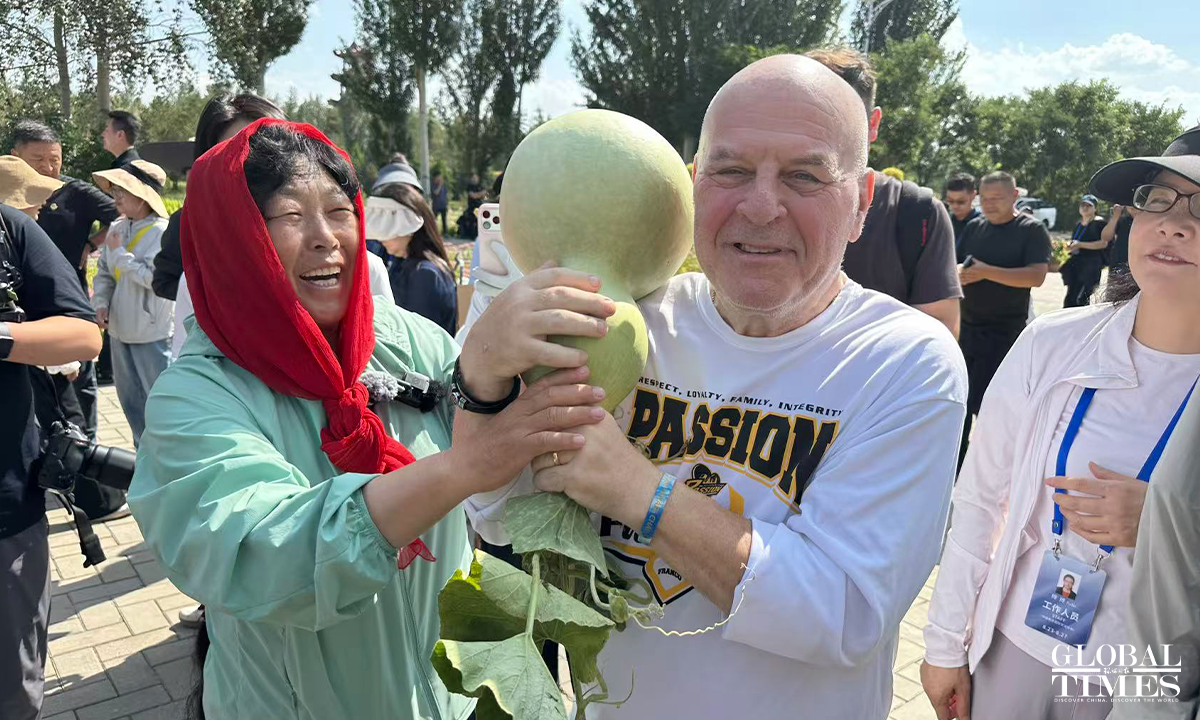
On Monday afternoon, American teacher Ronald Sakolsky visited the homeland of Chinese desert fighter Yin Yuzhen in Uxin Banner of Ordos, Inner Mongolia Autonomous Region. This was a place the American man had visited in 2000 and it has completely changed since then.
In 1999, Sakolsky, a teacher in a China-US education exchange program, was touched by a report on Yin and her husband's afforestation efforts in the harsh wilderness of Mu Us Desert, and raised $5,000 to support her green cause. During that visit, they took pictures - in front of the sunken pit where the Yin couple once resided and in the barren land with a finger-thin sapling they had just planted against a backdrop of dust and bare earth.
What has the $5,000 changed?
On Monday, they came to the Sakolsky forest - a permanent tribute honoring Sakolsky's early contribution to the region's ecological revival - and replicated the vintage pictures, standing in front of a pit that has long been abandoned and beside a newly planted sapling. This time, however, there are bushes and trees in the background.
This contrast not only witnessed their friendship across time and the Pacific Ocean, but also showcased a promise Yin has kept for 27 years and a green dream that has been made possible through generations of joint unwavering efforts from Yin, her husband and countless other sand fighters.
Homecoming with family cooking
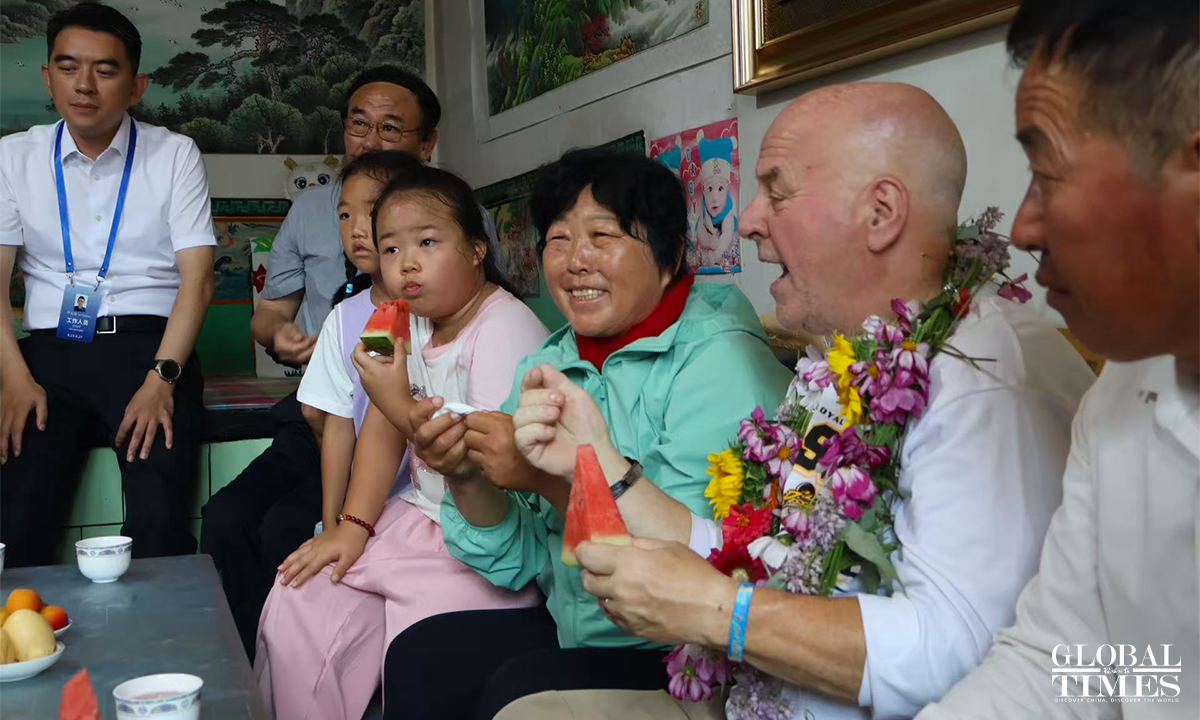
Yin hosted Sakolsky on Monday at her home, filling the air with the aroma of home-cooked meals during their long-awaited reunion. Watermelons were served along with other fresh fruits and vegetables, all harvested locally. Yin told the Global Times earlier that she learned the English word "more" to persuade him to eat more.
In 1999, Yin had few options for showing her hospitality, so she cooked a bowl of plain noodles for Sakolsky. Now, the harsh wasteland has transformed into a vibrant green oasis, thanks to unwavering afforestation efforts.
In the courtyard, the Global Times reporter saw Yin grinning from ear to ear with pride as she introduced the produce from the farmland - green pepper longer than a palm, a bottle gourd even bigger than Yin's head, and bags of foxtail millet packaged with the assistance of Yin's grandchildren, who are proud of the family's generations of commitment to green causes.
During a tour of Yin's home, Sakolsky was impressed by the beautiful house with its green courtyard, saying "You deserve every centimeter of this house." Throughout the visit, he repeatedly praised Yin's hands, which the desert fighter and model worker used to change both the land and her own life through arduous work.
The $5,000 Sakolsky donated in 1999 was equivalent to three years' income for Yin's entire family at the time. Today, that money has grown into more than 50,000 trees.
But Yin's journey did not stop there. Over the following decades, with the support of China's growing ecological restoration policies — including subsidies for afforestation and compensation for forest managers — she transformed the barren land into a productive family forest farm. Her success has inspired many others in the region to take up tree planting and sand control, transforming what was once a desperate struggle into a sustainable livelihood.
From the sandy hollow where the Yin couple lived in in 1985 and the earth hut they resided in until 1993, to the solid brick house Sakolsky saw when he last visited, and the two-story house the big family now lives in, the change in living environment is a clear example of ecological dividends.
Uxin Banner lies in the heartland of the Mu Us Desert. The desertification rate was over 90 percent in the 1950s and forestation coverage was merely 7.2 percent as of 1980. Now, the forestation rate has increased to 33 percent, while plantation coverage has expanded to 85 percent, per official data.
Carry on the greenness, kindness
This miracle would have been impossible without numerous people like Yin, long-term systematic planning and scientific governance.
Chen Ziliang, an expert from the local forestry and grassland bureau, said that Mu Us Desert's sand‑control journey has evolved from collective afforestation to contract desert‑reclamation, moving beyond the simple goal of "keeping trees alive" to restoring vegetation based on water‑resource conditions.
Putting the idea of "lucid waters and lush mountains are invaluable assets" into practice, Uxin Banner no longer views "greenness" and "growth" as an either‑or proposition. On restored sandy lands, the under‑forest economy, eco‑agriculture and eco‑tourism have flourished. Sand‑fixing shrubs are now processed into animal feed and biomass fuel, and local authorities are exploring photovoltaic‑powered desert control, the Global Times learned.
Sand control is no longer just about keeping sand away; it's a development approach that guarantees a greener and better living environment alongside a booming economy and increasing incomes.
On Monday afternoon, when Sakolsky finally stepped into the forest named after him, this American teacher witnessed the Chinese woman's perseverance and commitment to her promises. The $5,000 donated without expectations has grown into a thriving forest of around 50,000 trees.
"A promise is a promise. Ms. Yin fulfilled her promise," Sakolsky said. After 27 years, the wasteland is green, and Sakolsky and Yin are "brother and sister."
"This is the answer to how we guide young people: We must teach them love and perseverance. We need to show young people photos of Ms. Yin planting trees, digging the soil with her bare hands," Sakolsky remarked while packing a jar of sand. He said he planned to bring it back to the US, telling his grandchildren it is not just a jar of sand, but "a jar of love."
Sakolsky told the Global Times earlier that the younger generation only knows about the dust-covered landscape from photos and stories of the elderly. It is important to tell them how the greenness is achieved, and how every single person can contribute to making an extensive forest in the harshest environment.
"I see where China and America can work together. I see it, so I will not quit. She [Yin] never quit. 'Quit' is not in her vocabulary," Sakolsky said with emotion on Monday.
"Chinese and Americans can be family. We can get over the differences if we focus on the similarities... If we focus on our similarities and not our differences, we can solve the problems."
At the end of Monday's schedule, Yin and Sakolsky planted another sapling together, just as they did about three decades ago, but in a completely different landscape.
This new sapling carries on the story of not only greenness through generations of joint efforts, but also kindness across the Pacific Ocean.
。
Current article:http://v66x.zhanggengsenchaiweikeng.cfd/list_ifuj9u/axmbloq.html
Published on:12:35:39
 从零搭建WordPress网站:五步完整流程
 全新别克GL8陆上公务舱上市 22.99万 双层声学玻璃/二排贵宾座椅
 合理膳食,保持健康体重
 NASA韦伯望远镜揭示了“怪物”黑洞周围的银河系合并现象
 将于6月11日亮相/或售25万左右 小鹏G7更多官图发布
 IT之家Android 6.60发布:评论/文章、精读专栏、黑房子在线